


Before anything else. Thank you.
Last Wednesday I sent the hardest thing I have ever written, closed my laptop, and did not look at my inbox for several days. When I finally opened it, you were in there. Parents I have never met. Coaches. Players who wrote three sentences and then apologized for not knowing what to say.
You did not need to know what to say.
You showed up in my inbox and my texts during a week when I was not holding myself up well, and you held me up instead. Some of you prayed. Some of you sent a verse, and a few of you wrote to tell me you made the call you had been putting off for a year. Keep making those calls. :)
Grace is a word people throw around. But I got the real version of it from this community last week, and I really appreciate it.
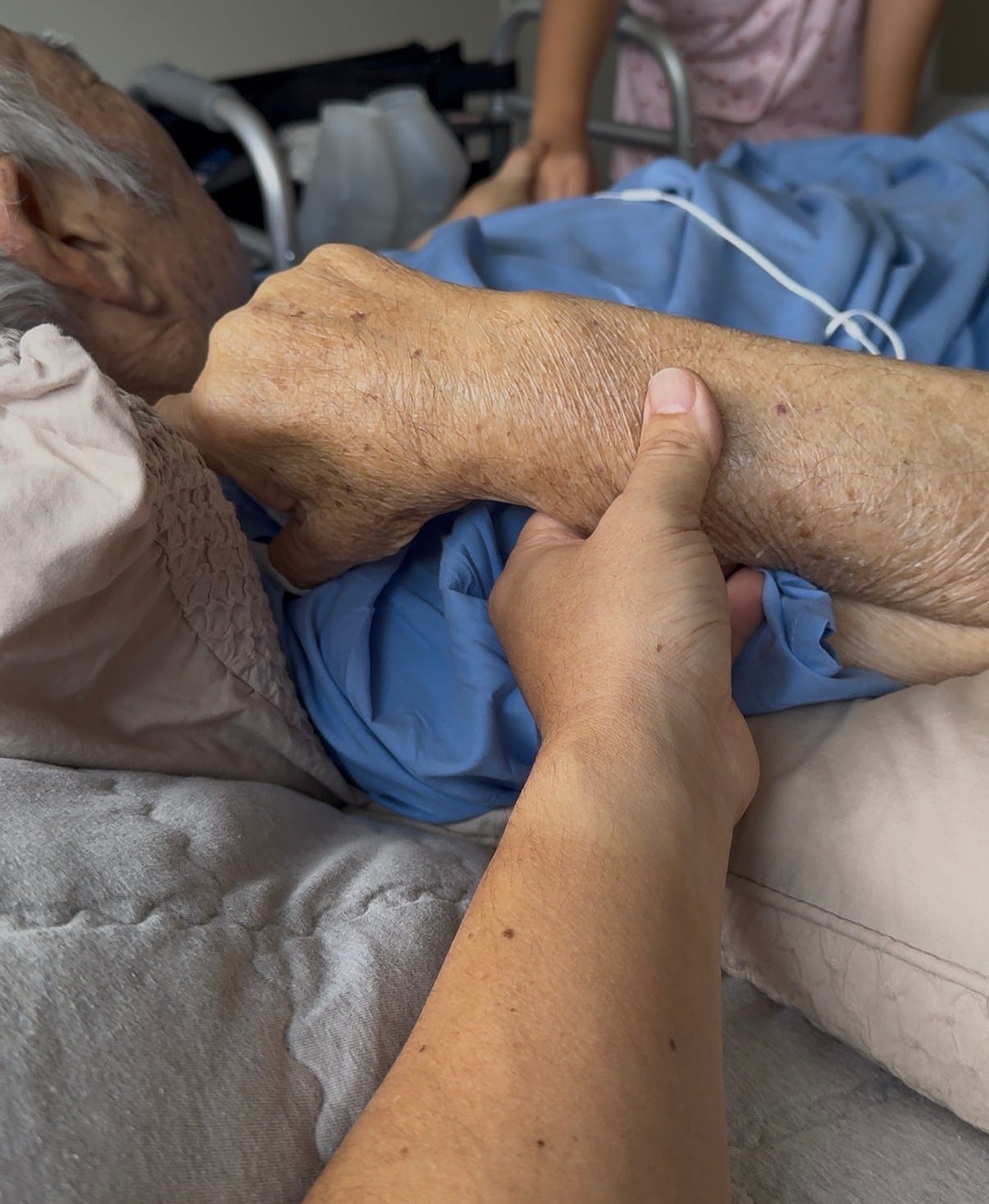
My family is still in the middle of this. My father’s in hospice now with only days remaining and I have not processed any of it quite yet, nor will I try and pretend that I have. What I do have is a week of living inside a feeling I have spent my whole career teaching other people to manage. So let me give you what I know about it.
Your kid feels a smaller version of the same thing every time they stand on a first tee with strangers watching.
Anxiety.
What your body is doing
Laying next to my dad on his hospital bed last Thursday, I noticed my hands were shaking. My chest was tight. My breathing had gone shallow and high up in my throat, and my stomach felt like it had dropped through the floor.
Here is the strange part. I know exactly what all of it is.
Adrenaline moves into your bloodstream. Your heart pushes more blood to your large muscles. Your pupils widen, and your vision narrows onto the thing in front of you while blurring the edges around you. Blood pulls away from your fingers, which is why your hands go cold and why your grip pressure changes without you even being aware of it.
None of this is a malfunction of our body or brain. Our body is doing precisely what it was built to do when something matters. It is getting you ready.
The problem with this is the story we tell ourselves on top of it. Your kid feels the heart rate on the first tee and interprets it as proof they are not ready.
The feeling is normal. The interpretation is what wrecks them.
The research
Jeremy Jamieson at Rochester has run study after study where he tells people, before a stressful task, that a pounding heart is just the body preparing them to perform. And those participants who believe this often do better under pressure. Their blood vessels stay open instead of constricting, which is the difference between a body braced for threat and a body ready for a challenge. Nothing about the physiology changed. Again… it is the meaning we give it that has changed.
Another researcher at Harvard, Alison Wood Brooks, tested something even simpler. She had people say two words out loud before singing in public, giving a speech, or taking a timed math test.
One group said “I am calm.” The other said “I am excited.”
The excited group outperformed the “I am calm” group across all three tasks. Trying to talk yourself into calm asks your nervous system to slam on the brakes at exactly the wrong moment. Excitement, on the other hand, runs on the same fuel as fear. You are steering the arousal instead of fighting it.
And lastly at UCLA, Matthew Lieberman found something very simple around this idea of naming an emotion to tame an emotion. What he found was the power of labeling emotions into words significantly lowers activity in the amygdala (our emotional brain). Naming the feeling turns the volume down. It does not get rid of the emotion… it just lowers the intensity of it.
The Full Circle Moment
Apostle Paul wrote about anxiety while he was in prison… in chains.
He tells the Philippians to be anxious for nothing, to bring everything to God with thanksgiving, and then he makes a promise about what follows.
And the peace of God, which transcends all understanding, will guard your hearts and your minds in Christ Jesus. -Philippians 4:7
The verb “to guard” is a military word. A garrison posted at the gate or a solider at his base. Paul does not promise that the enemy will stop coming. Instead, he promises something is standing there when it does. Peter says it another way. He says, “Cast all your anxiety on him because he cares for you.” - 1 Peter 5:6
Cast is a physical word. It is a throw or a handoff. You are not asked to stop feeling the weight. You are asked simply to put it somewhere other than your own shoulders.
I have prayed more in the last nine days than in the last nine months. Most of it was not eloquent. Most of it was one sentence in a parking lot or at the dining table with tears steaming down. It still counted.
What to do with it this week
Practice Naming it out loud. Have your player say the specific feeling instead of the vague one. Not “I am nervous.” Say “My hands are shaking and my chest is tight and this shot matters to me.” Specifically naming the emotion and the experience is what lowers the alarm. Vague naming leaves it running the show.
Exhale longer than you inhale. Two quick inhales through the nose, one long slow exhale through the mouth. Do it four to five times. The long exhale is the piece with the actual physiological effect on heart rate. Everything else is decoration. This works on the walk to the tee, not in the middle of the swing.
Trade “calm down” for “I am ready.” Nobody has ever calmed down because someone told them to. Give the arousal a job instead. The heart rate is fuel. Ask your player what the feeling is preparing them for, and let them answer out loud.
Put the attention outside the body. Focus on the club, the ball flight, the target, and your motor performance improves. Focus on your wrists, your shoulders, your hands, and it degrades. Anxiety drags attention inward. Your job is to hand it a target.
Write it down the night before. Studies have shown that just ten minutes of writing about worries before an exam helped anxious students perform better during the day of the exam. Get the loop out of working memory and onto paper. A notes app in a hotel room the night before a regional competition also counts.
One Last Thing
Your child is not broken because they feel anxiety. You are not weak because you have panic attacks. I have a doctorate in this and I still sat in a parking lot with shaking hands.
Anxiety is your body telling you something matters to you. The goal was never to feel nothing. A player who feels nothing on the first tee has stopped caring, and I would rather coach the shaking kid every single time.
Ask your player one question this week. Where do you feel it first?
Hands, stomach, jaw, throat, breath. They will know. Once they know where it shows up, it stops being a mystery and starts being information.
Then ask yourself the same question. You feel it too. You have been feeling it in the cart path and the parking lot and the drive home for years, and you have been calling it something else.
Hope this helps.
Your Mental Coach,
Dr. Mat
P.S. This Friday at 12:00 pm ET, MPGA Coach Gen Fulton, LMFT is hosting a live conversation with 3-time PGA Tour winner Patton Kizzire. They are talking about a professional’s real view of perfection, the routines that actually hold under pressure, and how goals get set when the scoreboard is watching. If the feeling described above is familiar in your house, this is the conversation worth being in the room for.
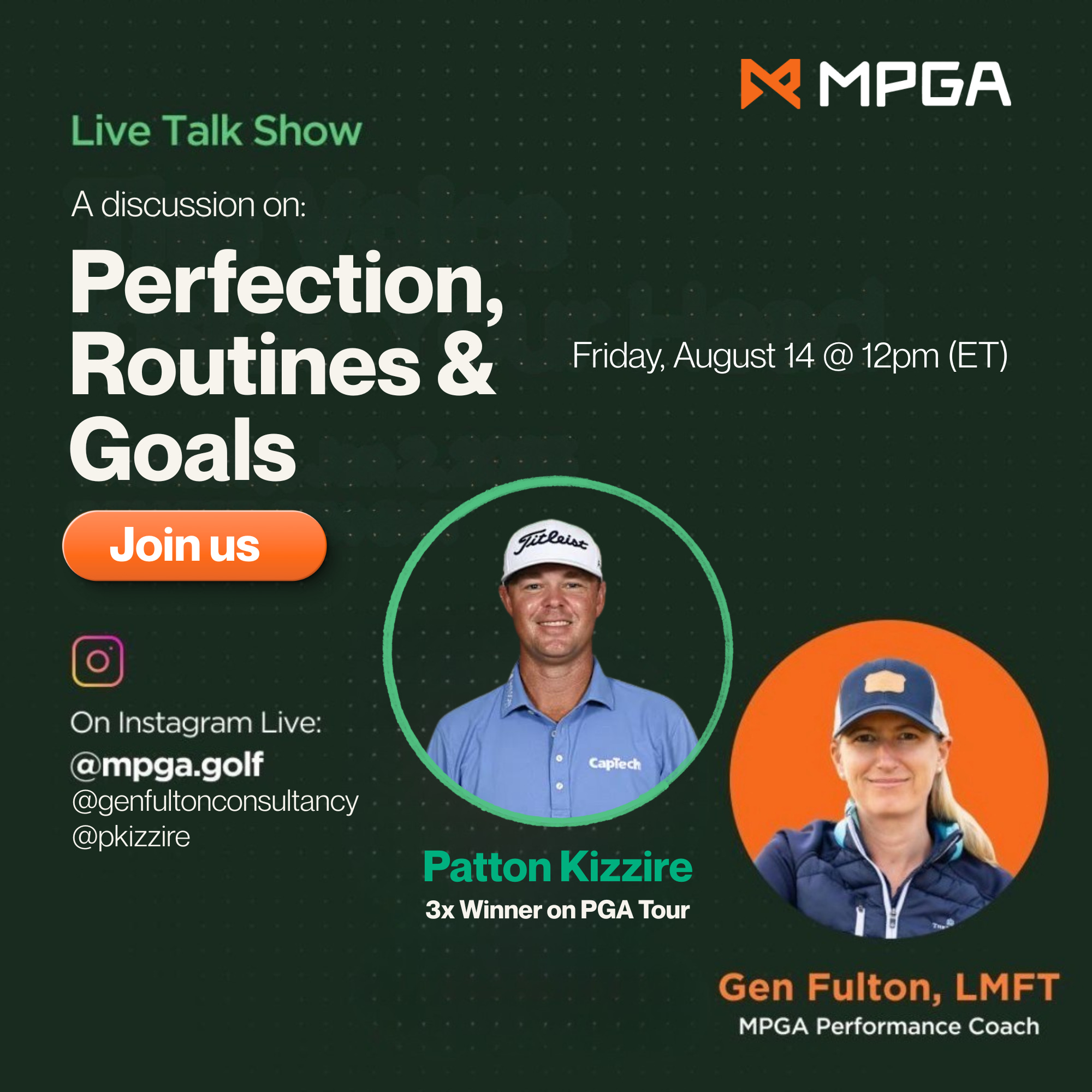
This event will be held LIVE on our IG channel.
Follow us here and join the conversation. @mpga.golf
Who am I?
I am Dr. Mat, a sport psychologist and the founder of the Mental Performance Golf Academy (MPGA). I work with elite junior golfers and the parents supporting them on the part of the game the range does not cover. I spend the rest of my working hours as a high performance psychologist at NASA. I’m really excited to release my newest book called ONE: A Spiritual Playbook for the Mental Game of Golf. You can get on the waitlist here.
Additionally, I co-host a podcast called Mind Your Game with LPGA Tour winner Cydney Clanton and run the MPGA+ mental training academy along side with her.
What this is newsletter about?
18 Holes with Dr. Mat arrives every Wednesday morning. One story, the research underneath it, the faith running through it, and one thing you use with your player before the weekend. Written for parents who want their kid to compete well and grow up whole.